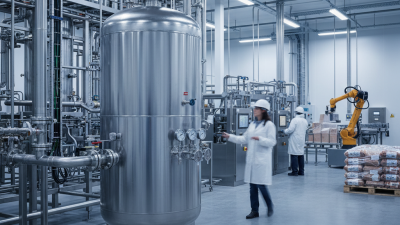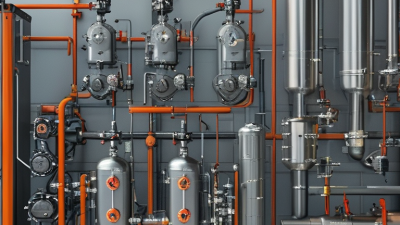
Choosing the right gas equipment in 2026 requires more than comparing prices, product photos, or supplier promises. Global buyers must examine application, fuel type, pressure range, operating environment, and maintenance access. A commercial kitchen may need burners, regulators, hoses, valves, and leak detection systems. An industrial site may require vaporisers, gas trains, flow meters, compressors, or emergency shut-off devices.
This guide explores the leading gas equipment types for international purchasing decisions. It considers natural gas, LPG, renewable gas, and other approved fuel applications. Each category has different demands. Storage tanks need corrosion protection and reliable pressure control. Regulators must deliver stable performance under changing flow conditions. Detectors should respond quickly in enclosed areas, where even a small leak can become dangerous.
Safety comes first.
Reliable selection also depends on documentation. Buyers should request test reports, material specifications, installation guidance, and clear after-sales support. Recognised certification can strengthen confidence, but certification alone does not guarantee suitability for every project. Local codes, climate conditions, import requirements, and installer qualifications still matter. That point is easy to overlook.
The discussion reflects practical purchasing concerns observed across commercial, residential, and industrial projects. However, no single equipment type fits every market. Product availability, fuel quality, budget limits, and service networks can change the final decision. A careful buyer should compare verified technical data with real operating needs. Small details, such as thread standards or spare-part delivery times, often influence long-term results more than advertised capacity.
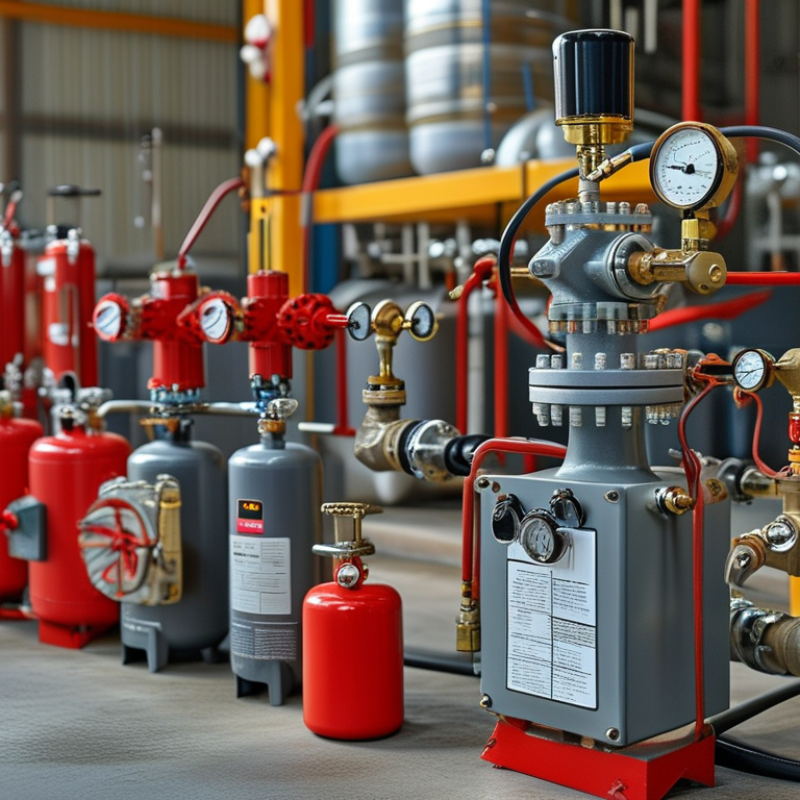
2026 Top Gas Equipment Types for Global Buyers
Gas equipment covers the systems that store, move, measure, regulate, detect, or use gases. Its scope includes cylinders, storage tanks, valves, regulators, meters, leak detectors, burners, compressors, and safety controls. In 2026, buyers are comparing equipment for industrial gases, heating, food processing, laboratories, and energy infrastructure. Demand is shaped by efficiency goals, stricter emissions expectations, and supply-chain uncertainty. However, market forecasts are not equally reliable across regions.
A practical buying decision starts with the gas type, pressure range, temperature, flow rate, and installation environment. Material compatibility matters near moisture, corrosive gases, or frequent pressure changes. During site reviews, technicians often check thread condition, seal wear, sensor response, and access for maintenance. These details seem small. They can prevent costly downtime. Product categories also overlap, so a “complete system” may still require separate filtration, ventilation, or emergency shutoff equipment. Local certification and inspection rules must be verified before purchase.
Tips: Request test records, operating limits, and maintenance guidance from suppliers. Compare total ownership cost, not only the purchase price. Keep spare seals and calibration plans available. A cheaper meter may become expensive when service support is distant. Buyers should also question optimistic efficiency claims and confirm performance under real operating conditions. This step is easy to skip, yet it often exposes the weakest assumption in a procurement plan.
| Equipment Type | Definition and Main Function | Typical Gas Service | Common Operating Range* | Primary Applications | Key Buyer Specifications | 2026 Purchasing Context |
|---|---|---|---|---|---|---|
| Gas Pressure Regulators | Devices that reduce and control gas pressure from a higher inlet pressure to a stable downstream pressure. | Natural gas, biogas, propane, butane, nitrogen, oxygen, hydrogen and industrial process gases. | Inlet pressure: from low-pressure distribution service to high-pressure industrial service. Outlet pressure: commonly from a few mbar to several bar, depending on design. | Building gas systems, industrial burners, laboratories, process skids and gas distribution networks. | Inlet and outlet pressure, flow capacity, accuracy, shut-off class, relieving or non-relieving design, connection size, temperature range and gas compatibility. | Buyers increasingly specify stable control at changing flow rates, compact installation, corrosion resistance and compatibility with renewable or blended gases. |
| Gas Valves | Isolation, control, non-return or emergency shut-off devices used to start, stop, regulate or protect gas flow. | Fuel gases, inert gases, oxidizing gases and specialty gases. | Available in low-, medium- and high-pressure configurations; pressure and temperature limits depend on valve construction and certification. | Gas trains, pipelines, cylinders, storage systems, burners, laboratories and emergency isolation systems. | Valve type, nominal size, pressure class, seat material, actuation method, leakage rate, fire-safe requirements and fail-open or fail-closed position. | Remote actuation, emergency shutdown capability, low-emission packing and digital position feedback are important for automated and safety-critical systems. |
| Gas Flow Meters | Instruments that measure the volume or mass flow of gas for custody transfer, process control, allocation or energy management. | Natural gas, compressed air, nitrogen, oxygen, hydrogen, biogas and mixed process gases. | Measurement range is technology-specific. Turbine, ultrasonic, thermal-mass, Coriolis and positive-displacement meters serve different pressure, flow and accuracy requirements. | Utility metering, industrial production, gas filling, energy monitoring and process optimization. | Flow range, pressure and temperature compensation, gas composition, accuracy class, turndown ratio, pressure loss, communication protocol and calibration method. | Digital outputs, remote diagnostics, data logging and the ability to handle variable gas composition are major selection factors. |
| Gas Analyzers | Instruments that identify or quantify one or more components in a gas stream. | Combustion gases, natural gas, biogas, hydrogen, oxygen, carbon dioxide, volatile compounds and specialty gas mixtures. | Measurement ranges vary from trace-level parts per million to percentage-level concentrations, depending on sensing technology. | Emissions monitoring, combustion control, gas quality verification, safety monitoring and process optimization. | Target gases, detection limit, response time, selectivity, sampling system, calibration gas, moisture tolerance, operating temperature and hazardous-area approval. | Gas composition monitoring is increasingly relevant where biomethane, hydrogen or other low-carbon gases are introduced into existing systems. |
| Gas Leak Detectors | Fixed or portable instruments that detect combustible, toxic or oxygen-deficient atmospheres. | Methane, propane, hydrogen, carbon monoxide, hydrogen sulfide, ammonia and oxygen-deficient environments. | Combustible-gas alarms are commonly specified as a percentage of the lower explosive limit; toxic-gas ranges are usually specified in ppm. | Industrial plants, utility networks, laboratories, commercial kitchens, confined spaces and storage areas. | Target gas, sensor technology, alarm thresholds, response time, ingress protection, battery life, calibration interval and hazardous-location certification. | Wireless monitoring, self-diagnostics, event logging and integration with plant safety systems are increasingly requested for connected facilities. |
| Gas Compressors | Machines that increase gas pressure by reducing gas volume or adding energy to the gas stream. | Natural gas, hydrogen, biogas, carbon dioxide, nitrogen, oxygen and industrial process gases. | Pressure ratio, suction pressure, discharge pressure and flow depend on reciprocating, screw, centrifugal, diaphragm or other compressor design. | Gas transmission, cylinder filling, hydrogen fueling, refrigeration, process plants and gas recovery. | Gas composition, pressure ratio, capacity, oil-free requirement, discharge temperature, pulsation, cooling method, maintenance interval and materials compatibility. | Energy efficiency, low leakage, oil-free compression and suitability for hydrogen service are important considerations for new installations. |
| Gas Storage Cylinders | Pressure vessels designed to store compressed gas for transport, supply, buffering or emergency use. | Industrial gases, medical gases, calibration gases, hydrogen, helium, nitrogen, oxygen and fuel gases. | Many industrial cylinders operate at elevated working pressures; exact limits depend on cylinder material, gas service, design code and filling temperature. | Gas distribution, laboratories, welding, healthcare, emergency supply and mobile applications. | Water capacity, working pressure, test pressure, cylinder material, valve connection, gas compatibility, tare mass, inspection interval and transport requirements. | Traceability, periodic inspection, lightweight materials and compatibility with hydrogen or other permeable gases should be confirmed before purchase. |
| Gas Manifolds and Changeover Systems | Assemblies that connect multiple gas sources and distribute gas to one or more downstream points, often with automatic cylinder changeover. | Medical gases, laboratory gases, welding gases, specialty gases and industrial process gases. | Designed for the source pressure and required outlet pressure; capacity depends on the number of cylinders, valves, regulators and downstream demand. | Hospitals, laboratories, fabrication shops, pilot plants and continuous gas supply systems. | Number of sources, peak flow, outlet pressure, gas purity, automatic or manual changeover, relief protection, alarm functions and connection standard. | Continuous supply, remote low-pressure alarms and modular expansion are valuable where interruption of gas service is unacceptable. |
| Gas Filters and Coalescers | Equipment that removes particles, liquids, oil aerosols or other contaminants from a gas stream. | Compressed air, natural gas, biogas, hydrogen and industrial process gases. | Particle and liquid removal performance is specified by micron rating, efficiency, allowable pressure drop and flow capacity. | Protecting regulators, meters, compressors, analytical instruments, burners and downstream process equipment. | Contaminant type, filtration efficiency, flow rate, pressure drop, drain method, element life, housing material and replacement availability. | Gas quality requirements are becoming more important as measurement equipment and high-efficiency process systems become more sensitive to contamination. |
| Gas Dryers | Systems that remove water vapor from gas to prevent corrosion, hydrate formation, condensation or product-quality problems. | Compressed air, natural gas, biogas, hydrogen and specialty gases. | Performance is normally expressed by pressure dew point or moisture concentration rather than by a universal pressure range. | Pipeline gas, instrument gas, gas storage, electronics manufacturing and analytical applications. | Inlet moisture load, outlet dew point, flow rate, regeneration method, pressure loss, energy consumption and desiccant compatibility. | Low-energy regeneration, stable dew-point control and designs suitable for variable flow are relevant to operating-cost reduction. |
| Gas Burners and Combustion Systems | Assemblies that mix fuel gas with combustion air and produce a controlled flame or heat release. | Natural gas, propane, biogas, hydrogen blends and other approved gaseous fuels. | Capacity is generally stated as heat input, such as kW or thermal units per hour; operating pressure depends on burner design and fuel. | Boilers, furnaces, ovens, kilns, water heaters, dryers and industrial heating equipment. | Heat input, turndown ratio, flame stability, air-fuel ratio, emissions, ignition, flame supervision and fuel composition. | Fuel flexibility, combustion efficiency and control of nitrogen oxides and carbon monoxide are central considerations for 2026 projects. |
| Gas Trains | Integrated assemblies containing valves, regulators, filters, pressure switches and safety devices for controlled burner fuel supply. | Natural gas, propane, biogas and approved gaseous fuels. | Selected according to burner capacity, supply pressure, required outlet pressure, valve train arrangement and applicable safety requirements. | Commercial and industrial combustion equipment, boilers, ovens, furnaces and process heaters. | Gas flow, pressure regulation, safety shut-off valves, valve proving, leak testing, combustion controls, enclosure rating and documentation. | Pre-engineered packages can simplify commissioning, while compliance documentation and safety interlocks remain essential buyer requirements. |
| Gas Pressure Safety Systems | Relief valves, slam-shut valves, excess-flow devices and related components that protect systems from overpressure or abnormal flow. | Natural gas, LPG, hydrogen, oxygen, nitrogen and industrial process gases. | Set pressure and relieving capacity must be calculated for the protected equipment and operating scenario. | Storage vessels, pressure-reduction stations, pipelines, gas trains and process plants. | Set pressure, relieving capacity, response time, reset method, discharge routing, material compatibility and inspection requirements. | Buyers should require documented sizing calculations, functional testing procedures and clear maintenance intervals. |
| Gas Heating and Vaporization Equipment | Equipment that adds controlled heat to vaporize liquefied gas or maintain gas temperature during pressure reduction. | LPG, LNG, liquid carbon dioxide, liquid nitrogen, liquid oxygen and other cryogenic or liquefied gases. | Capacity is specified by vaporization rate and heat duty; temperature and pressure limits are application-specific. | Fuel supply, industrial gas systems, laboratories, cold-chain applications and process plants. | Vaporization capacity, heat source, outlet temperature, materials, frost control, pressure drop, hazardous-area requirements and energy use. | Efficient heat transfer, automatic control and safe handling of low-temperature or flammable fluids are key procurement priorities. |
| Gas Distribution Panels | Panel-mounted systems that regulate, monitor and distribute gas from a source to one or more points of use. | High-purity gases, laboratory gases, medical gases, inert gases and process gases. | Configured for source pressure, delivery pressure, flow demand and purity level; clean-service systems require specialized construction. | Laboratories, semiconductor production, healthcare, research facilities and pilot plants. | Purity grade, dead volume, materials, orbital-welded or mechanical connections, leak rate, pressure control, purge arrangement and monitoring. | Cleanable designs, low internal volume, reliable changeover and digital pressure monitoring support demanding gas-quality applications. |
| *Operating ranges are indicative selection parameters, not universal ratings. Final pressure, temperature, flow, materials and certification requirements must be verified against the gas composition, installation conditions, applicable local regulations and the equipment manufacturer's technical documentation. | ||||||