China Top 10 Hydrogen Tank Manufacturers?
China’s hydrogen tank industry is expanding across transport, refueling, and stationary storage. This guide reviews ten leading Chinese manufacturers of hydrogen tanks and explains why their capabilities matter.
The ranking considers more than production volume. It examines Type III and Type IV designs, 35 MPa and 70 MPa pressure options, carbon-fiber winding, liner quality, testing capacity, and after-sales support. Certification evidence also matters, including relevant Chinese standards and international requirements such as ISO 11119. A polished brochure is not proof. Buyers should request test records, cycle-life data, burst-pressure results, and traceable material documentation.
Sunita Satyapal, a hydrogen-storage authority at the U.S. Department of Energy, has stated, “Hydrogen storage is a key enabling technology for the advancement of hydrogen and fuel cell technologies.” Her observation explains the practical focus of this article. Reliable hydrogen tanks affect vehicle range, refueling safety, operating costs, and long-term adoption.
The selected companies may serve different niches. Some focus on bus and truck cylinders. Others develop tanks for passenger vehicles, rail systems, or industrial hydrogen storage. Manufacturing scale varies. So does engineering depth.
No ranking is flawless. Public information can be incomplete, and supplier claims require verification. A factory visit may reveal more than a website. Readers should compare delivery records, inspection systems, pressure-testing procedures, and field performance before making a purchasing decision. This article offers a structured starting point, not a substitute for technical due diligence.
What Are Hydrogen Tanks and How Are They Classified?
Hydrogen tanks are engineered pressure vessels that store hydrogen gas or liquid hydrogen safely. Unlike ordinary gas cylinders, they must control leakage, pressure, temperature, and material embrittlement. A tank may sit inside a vehicle, beside a refueling station, or within an industrial storage system. Its location changes the design requirements.
Compressed hydrogen tanks are commonly classified as Type I, II, III, and IV.
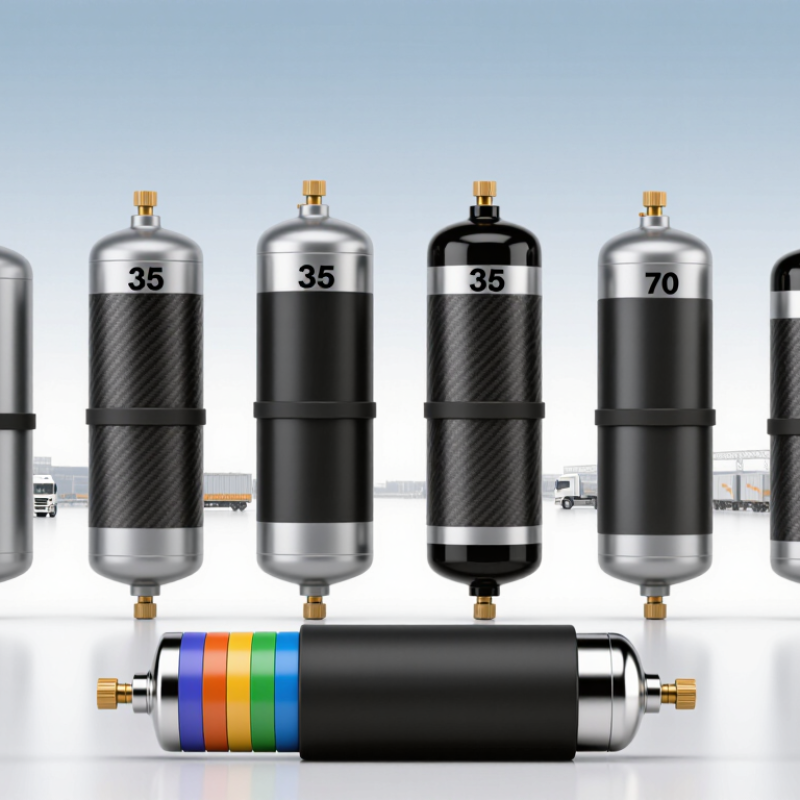
Type I uses steel or aluminum throughout the vessel. Type II adds partial fiber reinforcement around a metal liner. Type III uses a metal liner with full composite wrapping. Type IV combines a polymer liner with full composite reinforcement, reducing weight but increasing inspection demands. Type V designs remove the traditional liner and remain under development.
Pressure also provides a practical classification.
Many mobility systems use 350-bar or 700-bar storage, while industrial systems may follow different pressure ranges. Liquid hydrogen tanks work differently. They use heavily insulated vessels because hydrogen becomes liquid near 20 kelvin. Vacuum insulation and careful thermal management limit evaporation.
In field inspections, technicians check valves, joints, mounting points, and surface damage.
Small scratches can matter on composite layers. The classification looks tidy on paper, but real equipment often combines several design choices. Certification rules also differ by application and region, so technical documents should be reviewed before installation.
A lightweight tank is not automatically the safer tank.
China’s Top 10 Hydrogen Tank Manufacturers
China’s Top 10 Hydrogen Tank Manufacturers are shaping a fast-growing supply chain for hydrogen mobility and storage. The leading ten should be judged by engineering evidence, not advertising volume. Their products commonly include Type III and Type IV tanks, using aluminum or polymer liners with carbon-fiber reinforcement. Manufacturing quality depends on winding accuracy, resin control, curing temperature, and precise valve installation. Small defects can become serious under repeated pressure cycles.
A reliable manufacturer provides burst-pressure data, fatigue-test records, helium leak results, and full material traceability. It should also explain performance at low temperatures, during rapid filling, and after long outdoor exposure. Compliance with applicable national and international standards matters greatly. However, public rankings are rarely perfect. Some technical figures are incomplete, and production capacity may change quickly. Buyers should verify factory audits, independent testing, warranty terms, and after-sales support before making a decision.
Tips: Compare usable hydrogen capacity, not only tank volume. Ask for inspection records and serial-number traceability. Check whether the supplier has tested vibration, fire exposure, and pressure cycling. Visit the production line if possible. A polished brochure helps, but it cannot replace test evidence. Also, confirm the tank’s intended vehicle or station application, because one design may not suit every operating condition.
How to Choose the Right Hydrogen Tank Manufacturer in China
Choosing the right hydrogen tank manufacturer in China requires more than comparing prices.
Start with the tank’s application, working pressure, storage medium, temperature range, and installation space. A supplier should explain whether Type III or Type IV construction is suitable, including liner materials, carbon-fiber winding, valve compatibility, and permeation control.
Ask for evidence, not promises.
Request design calculations, burst-test results, pressure-cycle data, fire-test records, and inspection reports from qualified laboratories. Confirm compliance with applicable Chinese and international standards for your target market. Material traceability matters. Each liner, composite layer, valve, and batch should connect to a documented quality record. Factory audits can reveal winding conditions, curing controls, cleanliness, and calibration practices. A clean showroom proves little.
Check how the manufacturer manages design changes and nonconforming products.
A strong supplier explains its corrective-action process without hiding problems. That is useful. Also review delivery history, export documentation, packaging methods, warranty terms, and technical support after installation. Ask for sample drawings and a realistic production schedule. Some suppliers respond quickly but provide vague test evidence; this should slow your decision. An independent inspection may add cost, yet it can prevent expensive failures. No manufacturer is perfect, and even good specifications may miss your actual operating conditions. Share real pressure cycles, refueling frequency, ambient temperatures, and maintenance plans before approving a final design.