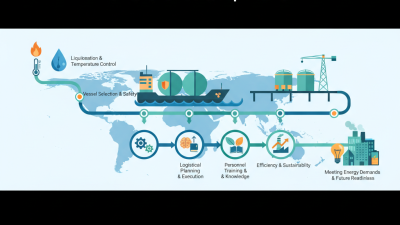
How to Choose LNG Transportation Services in 2026?

Choosing lng transportation services in 2026 requires more than comparing daily freight rates. LNG buyers must examine vessel quality, route reliability, terminal access, and operational transparency. A modern carrier may offer lower emissions, but its schedule could remain vulnerable to weather, congestion, or maintenance delays.

IEA Executive Director Fatih Birol has stated, “Energy security is not a given.” That warning applies directly to LNG logistics. A dependable provider should explain its contingency plans before signing a contract. Ask how it manages boil-off gas, cargo measurement, ship-to-shore compatibility, and emergency communication. Request evidence of vessel inspections, crew competence, insurance coverage, and previous performance on similar routes. Details matter. A delayed cargo can affect storage levels, industrial production, and regional electricity supply.

The strongest choice balances safety, cost, flexibility, and measurable environmental performance. Compare fuel consumption, methane management, voyage distance, and reporting standards. Check whether the carrier follows recognized maritime requirements and your company’s compliance procedures. Also review its ability to handle changing delivery windows in Asia, Europe, or the Americas. Cheap service is not always efficient service. Sometimes, it is only cheap on paper.

No checklist is perfect. That is worth admitting. Weather patterns can shift, terminals can change capacity, and market assumptions can age quickly. Buyers should therefore test providers with realistic scenarios, including a missed berthing slot or sudden destination change. The right lng transportation partner will answer clearly, document its claims, and remain accountable after the contract is signed. Reliability should be visible before the first cargo sails.
How to Choose LNG Transportation Services in 2026?

Define LNG Transportation Needs, Routes, and Cargo Requirements

How to Choose LNG Transportation Services in 2026?

Choosing LNG transportation services begins with a precise definition of your cargo needs. State the required volume, delivery frequency, LNG composition, and temperature range. LNG normally travels near -162°C, so thermal control is not a minor detail. Include loading rates, unloading limits, vapor management, and acceptable boil-off levels. A small error here can create delays, extra costs, or unsafe pressure conditions.

Route planning requires more than measuring distance between ports. Check terminal compatibility, channel depth, berth availability, weather exposure, and seasonal restrictions. Review port handling equipment and emergency response procedures before selecting a route. Inland delivery may require cryogenic tank trailers, approved transfer areas, and strict scheduling. A route that looks efficient on paper may fail during a storm or maintenance closure. That possibility deserves attention.

Cargo requirements should match the transport equipment exactly. Confirm tank capacity, insulation performance, pressure limits, monitoring systems, and custody-transfer measurement methods. Ask for maintenance records, operator training evidence, incident history, and documented compliance with applicable maritime and transport standards. Reliable providers should explain how they control boil-off gas and protect cargo during delays. Do not accept vague promises. Request practical operating procedures.

I would also test the plan with a delayed shipment scenario. It may expose weak storage assumptions. Cost matters, but predictable handling, transparent records, and responsive communication usually matter more. Some plans remain imperfect after review; identifying those gaps early is part of responsible LNG logistics.


Compare LNG Transport Modes, Fleet Types, and Service Capabilities

How to Choose LNG Transportation Services in 2026?

Choosing LNG transportation begins with the route, not the vehicle. Ocean carriers suit large-volume, long-distance shipments between specialized terminals. Coastal vessels work better for shorter routes and frequent port calls. Trucks provide flexible last-mile delivery, especially when pipelines or terminals are unavailable. Rail can support inland distribution, but route access and tank-car handling require careful verification. LNG remains extremely cold, near -162°C, so equipment quality directly affects safety and cargo control.

Fleet type matters as much as transport mode. Compare vessel capacity, tank design, insulation performance, loading speed, and boil-off gas management. For road delivery, inspect trailer age, pressure controls, remote tracking, and driver training records. A newer fleet is not automatically better. Maintenance history often reveals more. Ask for inspection evidence, emergency drill schedules, and clear procedures for delays, weather changes, and transfer interruptions.

Service capability separates a basic carrier from a dependable logistics partner. Look for terminal coordination, 24-hour monitoring, accurate delivery updates, and documented incident response. Strong providers can adjust schedules without hiding extra charges. They should also explain insurance limits, regulatory responsibilities, and cargo handover points in plain language. Check references from comparable routes and volumes. Small details matter. A perfect plan rarely survives the first delay, so test how the provider communicates when conditions change.

Evaluate Safety Standards, Regulatory Compliance, and Risk Controls

Choosing LNG transportation services in 2026 requires more than comparing freight rates. Safety performance should be tested against the International Maritime Organization’s ISM, SOLAS, MARPOL, and IGF Code requirements. The service provider should share recent inspection findings, emergency drill records, crew qualifications, and corrective-action evidence. Ask how often cargo containment, gas detection, emergency shutdown, and boil-off gas systems are tested.

Numbers matter. The GIIGNL 2025 Annual Report estimates global LNG trade reached approximately 411 million tonnes in 2024. Higher volumes increase exposure to transfer errors, berth delays, and equipment fatigue. The International Gas Union’s World LNG Report 2025 also shows continued expansion in liquefaction and shipping capacity. Growth can outpace operational discipline. That risk deserves attention.

Review independent vessel vetting, class status, port-state-control history, insurance coverage, and cyber-risk procedures. The IMO 2023 GHG Strategy targets net-zero shipping emissions around 2050, with major reductions by 2030 and 2040. Ask whether the carrier measures methane slip, fuel efficiency, and emissions data consistently. A clean certificate is not proof of a clean operation. I would request evidence from the last twelve months, not polished promises. Some controls may look strong on paper, yet fail during a cold-night loading interruption. That uncomfortable possibility should shape the final contract.

Assess Pricing Models, Delivery Reliability, and Tracking Systems

When choosing LNG transportation services in 2026, examine the pricing model before comparing headline rates. A low quote may exclude fuel adjustments, terminal charges, storage, or waiting time. Fixed pricing offers budget stability. Index-linked pricing may reflect market movements more fairly. Ask how currency changes affect invoices. Clarify minimum volumes and cancellation fees. During a 6 a.m. loading window, one delayed slot can create several hidden costs.

Delivery reliability needs measurable evidence, not confident promises. Review on-time delivery records, backup vessels, driver coverage, and weather procedures. Ask how the provider handles terminal congestion or equipment failure. A useful service should report delays early, with revised arrival times and practical alternatives. Check temperature and pressure controls during transfer. Small deviations can become expensive if nobody responds quickly. I would also request recent performance data, though some reports may be selective.

Tracking systems should show more than a moving map. Look for live location, tank status, route history, delivery timestamps, and automatic alerts. The dashboard should identify who received the cargo and when custody changed. Test the system with a sample shipment. Some platforms appear advanced but provide weak data after poor network coverage. Ask about offline records, user permissions, data retention, and incident logs. Tracking cannot prevent every delay. It can expose patterns early, helping logistics teams adjust schedules before a nearly empty tank becomes an emergency.

Select and Contract the Best LNG Transportation Provider

How to Choose LNG Transportation Services in 2026?

Select and Contract the Best LNG Transportation Provider

Selecting an LNG transportation provider in 2026 requires more than comparing freight rates. Review its operating history, safety records, crew training, and emergency response procedures. Ask for evidence of vessel inspections, cargo containment maintenance, and valid insurance. A capable provider should explain how it manages boil-off gas, weather delays, port congestion, and transfer documents. Request recent performance data, not polished promises. Small details matter, such as response times during a nighttime alarm.

The contract should define loading windows, delivery tolerances, custody transfer points, and measurement methods. Include clear duties for temperature and pressure monitoring. Specify who pays for demurrage, diversion, cargo loss, and equipment-related delays. Require regular status reports with tracked milestones. A practical emergency plan should name decision-makers and backup routes. Keep dispute procedures practical. Complex wording can hide expensive gaps.

Before signing, test the provider with a realistic route review. Examine a sample voyage plan, terminal checklist, and contingency drill record. Verify subcontractors instead of assuming responsibility has transferred. Technical audits and references from comparable cargo movements can strengthen confidence. Cybersecurity controls also deserve attention, especially for tracking and terminal communications. Still, no provider removes every risk. Forecasts change, and experienced teams can miss narrow scheduling windows. I would allow independent audits and quarterly contract reviews. That flexibility may cost more upfront, but it can protect supply continuity when conditions become difficult.

How to Choose LNG Transportation Services in 2026? - Select and Contract the Best LNG Transportation Provider
Evaluation Category Key Metric Recommended Contract Weight Verified Industry Benchmark What the Provider Should Demonstrate Priority Reference Basis
Cargo Compatibility LNG storage temperature 10% Approximately −162°C at atmospheric pressure Insulated cryogenic tanks, compatible transfer equipment, temperature monitoring, and documented cooldown procedures. Critical Cryogenic LNG handling practice; ISO 16903
Cargo Compatibility LNG density and tank loading basis 6% Typically about 430–470 kg/m³, depending on composition and temperature Loading calculations based on the actual LNG composition, density, maximum filling ratio, and tank design limits. Critical ISO 16903; LNG custody-transfer practice
Equipment Capacity Road tanker payload range 8% Common LNG road tankers carry approximately 40–60 m³, subject to local axle and gross-weight limits Confirmed usable capacity, tare weight, permitted payload, route restrictions, and availability of suitable trailers. Critical Typical cryogenic road-tanker specifications; applicable road-weight regulations
Equipment Capacity ISO LNG container capacity 5% Common 40-foot LNG container designs provide approximately 40–45 m³ of nominal tank volume Valid tank certification, maximum gross mass, lifting points, interchangeability, and compatibility with terminal handling equipment. Important ISO контейнер and cryogenic tank standards; applicable CSC requirements
Transport Mode Mode selection by shipment size 7% Truck and ISO containers suit small or distributed deliveries; marine transport is generally more efficient for large-volume movements A route model comparing truck, rail where available, coastal shipping, and ocean shipping by volume, distance, transfer points, and total landed cost. Critical Intermodal LNG logistics practice
Cargo Preservation Boil-off gas management 12% Marine LNG cargo boil-off is commonly managed within an indicative range of approximately 0.05–0.15% of cargo volume per day, depending on vessel and operating conditions Guaranteed boil-off methodology, pressure-control plan, cargo consumption or recovery arrangements, and transparent loss accounting. Critical LNG carrier operating practice; vessel-specific cargo containment data
Safety Management Emergency response capability 12% LNG operations require documented emergency shutdown, leak detection, fire protection, exclusion zones, and incident response procedures Current emergency response plans, drills, equipment inspection records, incident statistics, and 24-hour emergency contacts. Critical IMO IGC Code; IMO IGF Code; NFPA 59A where applicable
Regulatory Compliance Transport and dangerous-goods compliance 10% Requirements vary by jurisdiction and may include IMDG, ADR, RID, ADN, national dangerous-goods rules, and port regulations Valid vehicle, tank, vessel, driver, crew, route, and dangerous-goods documentation for every transport leg. Critical IMDG Code; ADR/RID/ADN; national transport regulations
Delivery Performance On-time delivery target 8% A practical contractual target is at least 95% on-time delivery, with agreed tolerance windows and force-majeure rules Historical performance data, defined arrival window, escalation process, backup equipment, and service-level credits for avoidable failure. Critical Common logistics service-level practice
Route Resilience Contingency capacity 7% A robust plan should identify alternative equipment, terminals, routes, and qualified subcontractors before service commencement Documented business-continuity plan, reserve tankers or containers, alternative loading points, and disruption notification procedures. Critical Supply-chain continuity and hazardous-material logistics practice
Traceability Shipment visibility and custody records 5% Each shipment should be traceable by booking, tank or vehicle identification, loading time, quantity, temperature, pressure, and delivery confirmation Electronic proof of delivery, GPS or milestone tracking, custody-transfer records, and auditable quantity reconciliation. Important LNG custody-transfer and hazardous-goods documentation practice
Measurement Accuracy Quantity and quality measurement 5% Commercial measurement should use calibrated meters, mass-flow systems, weighbridges, or accepted tank-gauging procedures Calibration certificates, agreed measurement hierarchy, sampling procedures, uncertainty limits, and dispute-resolution methodology. Critical ISO 6976; ISO 10715; custody-transfer measurement practice
Commercial Terms Cost structure and surcharge transparency 6% Total cost should distinguish base transport, loading, unloading, storage, tolls, fuel or energy surcharges, demurrage, and emergency services Itemized quotation, adjustment formula, currency and tax treatment, minimum-volume rules, cancellation fees, and no undisclosed accessorial charges. Critical Commercial logistics contracting practice
Contract Protection Liability and insurance coverage 6% Coverage should address cargo value, pollution, third-party liability, equipment damage, delay, and regulatory incidents Current certificates of insurance, liability caps aligned with cargo risk, indemnity terms, claims procedure, and subcontractor responsibility. Critical Hazardous-cargo transport insurance and contract practice
Sustainability Transport emissions reporting 3% Emissions should be reported using defined boundaries, activity data, fuel consumption, distance, cargo quantity, and a documented calculation method Well-to-tank or tank-to-wheel boundary clearly stated, emission factors disclosed, and low-emission equipment options offered where feasible. Important ISO 14083; GHG Protocol transport accounting principles
Recommended decision method: score each provider from 0 to 5 for every metric, multiply the score by the contract weight, and require a minimum score of 4 for all critical safety, regulatory, cargo-preservation, and liability criteria before signing.