Why Are Oil Field Applications So Important?

Oil field applications are essential because they connect geological potential with safe, measurable, and economically responsible production. They include drilling systems, reservoir monitoring, artificial lift, produced-water treatment, emissions control, and digital maintenance. Each application affects a real operating detail. A pressure sensor can prevent unstable production. A corrosion program can protect a pipeline before a small defect becomes a serious failure.

The International Energy Agency’s Oil 2024 report projects global oil demand will reach about 105.4 million barrels per day by 2030. It also expects production capacity to rise toward 113.8 million barrels per day. These figures show a difficult balance. Operators must produce reliably while managing excess capacity, aging assets, and tighter environmental expectations. Better oil field applications can improve recovery, reduce unplanned shutdowns, and support stronger decisions from field data. However, technology alone cannot solve every operational problem. Poorly calibrated sensors, incomplete geological models, or weak maintenance practices can still create expensive mistakes.

Safety remains central. The U.S. Energy Information Administration and industry standards from organizations such as the American Petroleum Institute emphasize reliable infrastructure, operational controls, and transparent performance measurement. In practice, this means inspecting valves, tracking pressure changes, and reviewing maintenance records—not merely purchasing advanced software. The details matter.

The industry is also changing. Electrification, methane detection, automation, and lower-carbon processes are becoming more important across many assets. Their value depends on local geology, workforce capability, and project economics. Some applications deliver immediate benefits; others need years of evidence. That uncertainty deserves honest attention. Understanding why oil field applications matter requires both technical confidence and continuous reflection.
Why Are Oil Field Applications So Important?

Oil Field Applications: Definition and Main Areas of Use

Why Are Oil Field Applications So Important?

Oil field applications are the practical tools, systems, and methods used across the petroleum lifecycle. They support geological surveys, well planning, drilling, production, maintenance, and site monitoring. In simple terms, these applications help teams turn underground information into safer, measurable field decisions.

The main areas of use begin with exploration. Seismic software and geological models help specialists identify promising formations beneath rock layers. During drilling, digital controls track pressure, temperature, torque, and equipment performance. Small changes can matter. Production applications monitor flow rates, pump conditions, and reservoir behavior. Engineers can then adjust operations before a minor fault becomes costly downtime.

Maintenance is another important area. Inspection systems record vibration, corrosion, leaks, and service history for pipelines, storage units, and rotating equipment. Field technicians may use mobile applications to review readings beside a wellhead, even in difficult weather. Safety applications also manage permits, emergency procedures, worker locations, and exposure records. Environmental monitoring measures water quality, emissions, waste, and ground conditions near operating sites.

Reliable results depend on accurate sensors and trained personnel. A dashboard can look impressive, yet poor input creates poor decisions. That is an uncomfortable limitation. Oil field applications should support human judgment, not replace it. Data may be incomplete, and models can miss unusual geological behavior. Regular verification, clear documentation, and independent inspections make these tools more trustworthy across changing field conditions.
Why Are Oil Field Applications So Important?

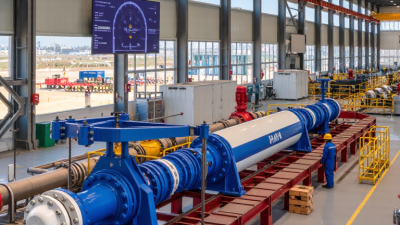
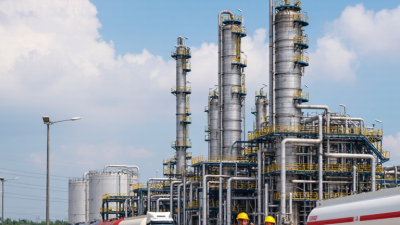
Oil field applications support exploration, drilling, well completion, artificial lift, production monitoring, maintenance, and enhanced recovery. These activities help operators access hydrocarbons safely and efficiently for major end-use sectors such as transportation, petrochemicals, aviation, industry, and power generation.

Data shown as rounded estimates of global oil demand by major application in 2023. Source: International Energy Agency, Oil 2024.

How Oil Field Applications Support Exploration and Drilling

Why Are Oil Field Applications So Important?

Oil field applications support exploration by turning scattered geological clues into workable decisions. Seismic data, well logs, satellite images, and soil samples can be reviewed in one operational workflow. Geologists use these tools to compare rock layers and identify structures that may contain hydrocarbons. The process reduces guesswork, but it does not remove uncertainty. A promising seismic image can still represent a dry or commercially weak formation.

During drilling, field applications connect planning with conditions at the rig. Engineers monitor pressure, temperature, vibration, and drilling speed while the well advances. These readings can reveal unstable formations or unexpected fluid movement. A timely adjustment may protect the wellbore and reduce costly downtime. Clear dashboards also help specialists communicate across the control room, geological team, and field crew.

Practical experience shows that accurate data matters more than impressive software. Sensors need calibration. Workers need training. Poor connections can delay critical information. Even a well-designed application may produce misleading results when data is incomplete or entered incorrectly. That weakness deserves attention. Human judgment remains essential, especially when drilling conditions change faster than a plan. Reviewing each alert against rock samples, pressure trends, and crew observations creates a more reliable picture of the subsurface. Safety procedures and environmental monitoring should remain part of the same decision process.

The Role of Oil Field Applications in Production and Recovery

Oil field applications connect reservoir knowledge with daily production decisions. They include seismic interpretation, drilling analytics, artificial lift, well testing, and production monitoring. Each application helps engineers locate pressure losses, water movement, or declining flow before problems become expensive. In practical field work, a pressure chart can reveal more than a polished dashboard. Small changes matter. A falling pump efficiency may signal gas interference, scale, or reservoir damage. The International Energy Agency’s Oil 2024 report expects global oil demand to reach about 104.5 million barrels per day by 2030. Meeting that demand requires better recovery from existing assets, not only new wells.

Production applications also support recovery efficiency. Reservoir simulation can test injection rates, while intelligent completions help control unwanted water or gas entry. The U.S. Department of Energy notes that enhanced oil recovery can access substantial volumes of oil left after primary and secondary production. However, results vary widely between reservoirs. That limitation deserves attention. A model can look precise while using weak data. Engineers must compare forecasts with pressure surveys, fluid samples, and actual decline rates. The International Energy Forum has reported that mature fields commonly experience annual production declines without continued investment and technical intervention. Oil field applications therefore improve surveillance, reduce avoidable downtime, and guide safer operating choices. They do not replace judgment. Field conditions remain messy, and recovery plans sometimes need revision.

How These Applications Improve Safety, Efficiency, and Cost Control

Why Are Oil Field Applications So Important?

Oil field applications connect field crews, equipment data, and maintenance records in one working environment. A technician can check pressure readings before entering a production area. This simple step may prevent exposure to dangerous conditions. Real-time alerts also help supervisors respond to leaks, overheating, or unusual vibration. Small errors matter.

Digital checklists make safety procedures more consistent across shifts. They can require permits, equipment inspections, and protective gear checks before work begins. Experienced supervisors still need to review critical alerts. Software should support judgment, not replace it.

These applications also improve efficiency by reducing repeated paperwork and delayed communication. Crews can receive work orders on mobile devices and record repairs beside the equipment. Accurate records help engineers identify recurring failures and schedule maintenance before costly downtime occurs. Cost control becomes clearer when managers compare labor hours, spare parts, energy use, and lost production. Reliable results depend on clean data. A rushed rollout can create false confidence if sensors are poorly calibrated or workers receive limited training. Regular audits, practical training, and independent verification keep the system useful. That discipline is easy to underestimate.

Environmental and Technological Challenges in Oil Field Applications

Why Are Oil Field Applications So Important?

Environmental and Technological Challenges in Oil Field Applications

Oil field applications influence production, worker safety, and environmental protection. Their importance becomes clear during daily operations, not only during emergencies. A small leak near a storage tank can contaminate soil and create harmful vapors. Produced water also requires careful treatment before reuse or disposal. Field teams often inspect pipelines, valves, and pressure equipment under difficult weather conditions. These inspections can reveal corrosion, vibration, or weak connections before failures occur. However, inspection schedules are not always consistent. That gap deserves honest attention.

Modern technology helps operators detect problems earlier. Sensors can monitor pressure, temperature, flow rates, and methane levels continuously. Remote systems reduce unnecessary site visits and provide faster warnings. Predictive maintenance can identify unusual equipment patterns before a costly shutdown. Yet data quality remains a serious challenge. A damaged sensor may produce a convincing but incorrect reading. No system is perfect.

Environmental performance also depends on human judgment. Engineers must compare monitoring results with physical observations and maintenance records. Spill response plans should include clear routes, nearby equipment, and trained personnel. Water samples need reliable handling and documented testing procedures. Energy use is another concern, especially when older equipment requires excessive fuel. Practical improvements may involve electrification, leak detection, better insulation, and stricter inspection routines. These solutions require investment, training, and patience. A dashboard cannot replace a careful walk around the site.

Why Are Oil Field Applications So Important? - Environmental and Technological Challenges in Oil Field Applications

Challenge or Application Area Verified Data or Industry Fact Why It Matters Relevant Technologies and Practices Useful Performance Indicators Reference Basis
Methane emissions The fossil-fuel sector released approximately 120 million tonnes of methane in 2023, according to global energy-sector assessments. Methane has a much higher short-term warming effect than carbon dioxide, making leak prevention important for climate protection and resource conservation. Continuous methane sensors, optical gas imaging, aerial surveys, satellite monitoring, leak detection and repair programs, and vapor-recovery systems. Methane intensity, leak repair time, detected leaks per inspection, methane volume recovered, and percentage of equipment inspected. International Energy Agency, Global Methane Tracker 2024.
Routine gas flaring Global gas flaring reached approximately 148 billion cubic metres in 2023. Flaring wastes a saleable energy resource and produces carbon dioxide, nitrogen oxides, soot, and other air pollutants. Flare-gas recovery, gas reinjection, improved compression, flare monitoring, and infrastructure for gathering associated gas. Flared gas volume, flare intensity, combustion efficiency, recovered gas volume, and non-routine flaring hours. World Bank Global Gas Flaring Reduction Partnership, 2024 estimates.
Operational greenhouse-gas emissions Oil and gas operations account for about 15% of energy-related greenhouse-gas emissions, including emissions from extraction, processing, and transport. Reducing operational emissions can lower the climate impact of energy production while improving regulatory and environmental performance. Electrification of equipment, renewable-powered field operations, energy-efficient pumps, carbon accounting, and emissions-management software. Kilograms of carbon dioxide equivalent per barrel of oil equivalent, fuel consumption per unit of output, and Scope 1 emissions. International Energy Agency, Emissions from Oil and Gas Operations in Net Zero Transitions.
Produced-water management Produced water is commonly the largest-volume waste stream associated with oil and gas production, and its volume generally increases as mature fields age. Poor management can create risks involving salinity, hydrocarbons, treatment chemicals, surface water, groundwater, and disposal capacity. Membrane filtration, hydrocyclones, dissolved-gas flotation, evaporation, reinjection, online water-quality sensors, and treatment automation. Water-to-oil ratio, treated-water quality, disposal volume, reuse percentage, oil-in-water concentration, and injection pressure. International Association of Oil & Gas Producers technical guidance; national environmental permitting frameworks.
Water consumption and water stress Hydraulic fracturing uses water during well completion, while conventional production also requires water for drilling, cooling, processing, and injection. Water requirements vary significantly by geology and field design. Water-intensive operations can compete with domestic, agricultural, and ecological needs, especially in water-stressed regions. Water recycling, non-potable water sources, closed-loop drilling systems, smart injection control, and watershed-risk assessment. Freshwater withdrawal, freshwater intensity, recycled-water percentage, water-stress exposure, and discharge compliance rate. United Nations water-stress assessments; International Association of Oil & Gas Producers water-management guidance.
Spill prevention and soil protection Oil spills can contaminate soil, surface water, groundwater, and coastal ecosystems; environmental effects may persist for years depending on the substance and site conditions. Early detection reduces the release volume, cleanup cost, ecological damage, and potential harm to nearby communities. Double-walled tanks, secondary containment, pressure monitoring, automated shutoff valves, corrosion control, drones, and emergency-response systems. Number and volume of spills, detection time, response time, containment percentage, and contaminated-area remediation progress. U.S. Environmental Protection Agency oil-spill prevention requirements; international spill-response standards.
Well integrity and abandoned wells Cement, casing, pressure-control equipment, and plugging practices are essential barriers that help prevent uncontrolled fluid movement and methane migration. Loss of well integrity can create safety hazards, groundwater risks, fugitive methane emissions, and long-term remediation liabilities. Cement evaluation logs, pressure tests, corrosion monitoring, fiber-optic sensing, barrier verification, and permanent plugging. Annulus pressure, barrier-test pass rate, integrity failures, methane readings near wells, and percentage of wells inspected. International Association of Oil & Gas Producers well-integrity guidance; national well-construction regulations.
Seismicity associated with injection Large-volume fluid injection can alter underground pressure and, in some geological settings, trigger induced seismicity. Monitoring and pressure management help protect infrastructure, workers, and communities while supporting safe subsurface operations. Dense seismic arrays, downhole pressure gauges, injection-rate controls, geological modeling, traffic-light protocols, and real-time alarms. Injection pressure, injection volume, earthquake magnitude and frequency, distance to faults, and response time to threshold events. U.S. Geological Survey research; national subsurface-injection monitoring requirements.
Energy efficiency and equipment reliability Pumping, compression, artificial lift, separation, heating, and water handling can represent substantial energy demand within field operations. Efficient equipment lowers fuel use, operating costs, emissions, and unplanned downtime. Variable-speed drives, predictive maintenance, digital twins, condition monitoring, efficient motors, and automated production optimization. Energy intensity, equipment availability, mean time between failures, unplanned downtime, and maintenance cost per unit of output. International energy-efficiency best practices and field-operations engineering standards.
Remote and autonomous operations Remote monitoring can reduce the need for personnel to enter hazardous or difficult-to-access areas, particularly offshore, desert, Arctic, and high-temperature environments. Fewer site visits can improve worker safety, shorten response times, and support continuous environmental monitoring. Industrial Internet of Things sensors, unmanned aerial vehicles, robotics, edge computing, satellite communications, and control-room analytics. Remote coverage percentage, alarm response time, personnel exposure hours, inspection frequency, and system availability. International Organization for Standardization automation and functional-safety principles; industrial safety guidance.
Data quality and cybersecurity Modern oil-field applications depend on interconnected sensors, control systems, communications networks, and cloud or edge data platforms. Reliable data supports safe decisions, while cyber incidents or inaccurate measurements can interrupt production and compromise environmental reporting. Network segmentation, access control, encrypted communications, asset inventories, anomaly detection, data validation, and backup procedures. Data completeness, sensor uptime, false-alarm rate, cybersecurity incidents, recovery time, and percentage of critical assets monitored. International Organization for Standardization and International Electrotechnical Commission industrial cybersecurity frameworks.

Note: Reported values and operational indicators vary by reservoir geology, production method, regulatory jurisdiction, equipment design, and measurement boundary.