2026 Best Nitrogen Tanks for Optimal Performance and Efficiency?
As industries evolve, the demand for efficient and high-performance nitrogen tanks intensifies. These tanks play a crucial role in various applications. From manufacturing to food preservation, nitrogen tanks are essential.
However, choosing the best nitrogen tank often presents challenges. Factors like efficiency, design, and compatibility must be considered. Issues may arise if the selected tank does not meet specific requirements.
The quest for optimal performance in nitrogen tanks involves multiple aspects. Understanding your needs is vital. This guide aims to highlight options available in 2026. By exploring features and specifications, you can find the right tank. Let’s embark on this journey to enhance efficiency through smarter nitrogen tank choices.
Overview of Nitrogen Tanks and Their Importance in Performance
Nitrogen tanks play a crucial role in various industries, notably in the fields of manufacturing and food preservation. These tanks provide a reliable source of nitrogen gas, which is essential for creating an inert atmosphere. This is vital for preventing oxidation and spoilage in products. A report by the Compressed Gas Association shows that nitrogen is used in over 50% of food packaging applications. This statistic highlights the tank's importance in maintaining optimal product integrity.
In industrial applications, nitrogen is often employed to improve efficiency. It is used in laser cutting and welding processes. A study by the American Welding Society notes that using nitrogen can reduce thermal distortion of materials. As a result, this leads to better precision in manufacturing. However, not all nitrogen tanks perform equally. Factors such as tank size, purity levels, and pressure settings can significantly impact performance. Choosing the right tank can be challenging, as not every option meets every use case.
Yet, some users may overlook tank maintenance. Regular checks on nitrogen purity and pressure are essential for optimal operation. Industry analysis frequently points out that neglecting these factors can lead to reduced efficiency and increased costs. It's clear that while nitrogen tanks offer significant benefits, awareness about their maintenance is equally critical for users aiming to enhance performance and efficiency.
This chart represents key performance metrics critical for evaluating nitrogen tanks in 2026. Metrics such as storage capacity, pressure stability, and leak rates greatly influence tank efficiency and reliability, directly impacting usage frequency and overall cost-effectiveness.
Types of Nitrogen Tanks: Selection for Specific Applications
Choosing the right type of nitrogen tank is crucial for achieving optimal performance and efficiency. According to a 2023 industrial gas report, compressed gas cylinders dominate over liquid nitrogen tanks in small-scale applications, primarily due to ease of transport and lower initial costs. However, liquid nitrogen tanks offer better thermal insulation, suitable for medical and laboratory use where precise temperature control is essential. These tanks often minimize nitrogen loss during storage but come with higher maintenance demands.
For welding and manufacturing, high-pressure gas cylinders provide consistent nitrogen flow, which is vital for product quality. Industry data shows that tanks rated for 3000 psi and above improve efficiency by reducing refill frequency. Still, users must carefully balance tank size and pressure to avoid unnecessary weight and handling difficulties. Liquid nitrogen dewars can be bulky, sometimes overkill for simple purging tasks, leading to wasted resources.
Tips: Regularly inspect your nitrogen tank for leaks and pressure drops. Use appropriate regulators matching your application’s flow requirements. Avoid overfilling tanks to extend their lifespan and safety. Selecting the right type involves trade-offs, and understanding the specific application needs prevents inefficiencies.
Key Features to Look for in Nitrogen Tanks for Efficiency
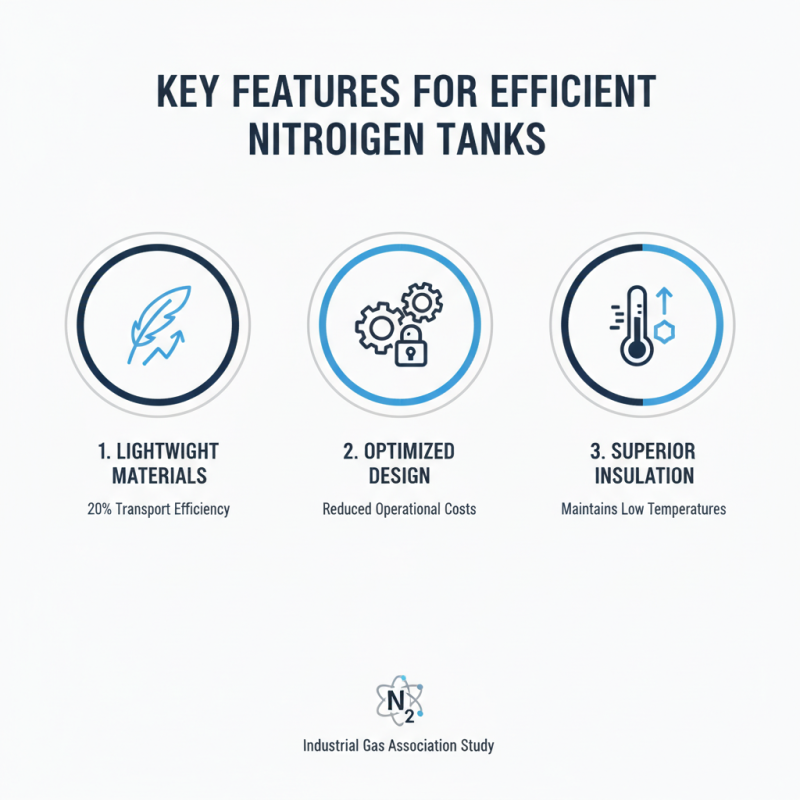
When selecting nitrogen tanks for optimal performance, efficiency is a top priority. Key features play a significant role in maximizing the effectiveness of these tanks. For instance, tank design should prioritize lightweight materials. A study by the Industrial Gas Association indicates that lighter tanks can improve transport efficiency by 20%. This can significantly reduce operational costs over time.
Another important feature is the tank’s insulation. Proper insulation helps maintain nitrogen stability and minimizes waste. According to a report from the Cryogenic Society, poorly insulated tanks can result in a 15% loss of nitrogen over the tank’s lifespan. This inefficiency can lead to unnecessary expenditures.
Also, consider the tank’s pressure rating. Tanks with higher pressure capabilities provide greater versatility. Properly rated tanks can handle diverse applications, improving workflow and reducing the need for frequent refills. Many facilities overlook these details, leading to potential performance bottlenecks. Choosing the right nitrogen tank requires careful thought about these essential features.
Maintenance and Best Practices for Optimal Nitrogen Tank Performance
Maintaining optimal performance from nitrogen tanks requires attention to detail and adherence to best practices. Regular inspections can significantly enhance efficiency. According to industry reports, over 30% of nitrogen tank failures result from improper maintenance. It’s crucial to check the integrity of pressure relief valves. Corrosion can happen, so examine fittings and connections regularly.
Tips: Always store nitrogen tanks upright. This prevents leaks and ensures safety during operation. Monitor the pressure gauge frequently. If you notice fluctuations, inspect the tank immediately.
Another area of focus involves temperature control. Nitrogen tanks perform best within specific temperature ranges. Operating outside these limits can reduce efficiency. Data shows that tanks exposed to extreme temperatures can lose 15% of their performance. Keep tanks in a controlled environment.
Tips: Ensure good ventilation in storage areas. Heat can build up, impacting tank integrity. Document maintenance schedules. This fosters a systematic approach ensuring nothing is overlooked.
2026 Best Nitrogen Tanks for Optimal Performance and Efficiency
| Tank Type |
Capacity (Liters) |
Max Pressure (psi) |
Material |
Weight (kg) |
Best Practices |
| Vertical Tank |
50 |
2500 |
Steel |
30 |
Regular inspection and maintenance |
| Horizontal Tank |
100 |
3000 |
Aluminum |
40 |
Avoid extreme temperatures and check valves |
| Portable Tank |
20 |
2000 |
Composite |
15 |
Store upright and secure during transport |
| Cryogenic Tank |
150 |
5000 |
Stainless Steel |
60 |
Monitor temperature and check insulation |