Best Forklift Collision Detection Systems Explained
In today's bustling warehouses, safety is paramount. A Forklift Collision Detection System plays a vital role in preventing accidents. These systems use advanced sensors and alarms to detect potential collisions. They help operators navigate more safely in tight spaces.
Many organizations invest in these technologies, yet challenges remain. Not all systems offer the same level of efficacy. Some may provide only basic alerts, while others feature real-time monitoring. It’s crucial to evaluate options carefully. Workplace layout, traffic patterns, and specific needs determine effectiveness.
Improving safety is a continuous journey. Forklift Collision Detection Systems can certainly reduce risks. However, proper training and user awareness are equally important. Employees must understand how to use these systems effectively. The goal is not just to install technology, but to cultivate a culture of safety.
Overview of Forklift Collision Risks in Industrial Settings
Forklifts are essential in many industrial settings. However, they also pose significant collision risks. According to the Occupational Safety and Health Administration (OSHA), lift truck accidents account for about 20% of workplace fatalities. This staggering number highlights the need for urgent attention to safety measures.
Workers face a variety of hazards around forklifts. In busy warehouses, blind spots can hide pedestrians and other vehicles. More than 90% of forklift accidents result from unsafe operation. The solution often begins with adopting advanced collision detection systems. These technologies can prevent accidents by alerting operators to potential dangers. For example, a system may use sensors that detect nearby moving objects. When something enters a predefined zone, the system triggers an alert.
Beyond technology, human factors play a critical role. Workers might not always follow safety protocols due to oversight. Fatigue can lead to slow reactions, increasing the risk of accidents. Proper training is essential but often overlooked. A comprehensive approach that combines technology with increased awareness and training can help reduce risks. Awareness of the environment and adherence to safety practices should be prioritized.
Technological Advances in Forklift Collision Detection Systems
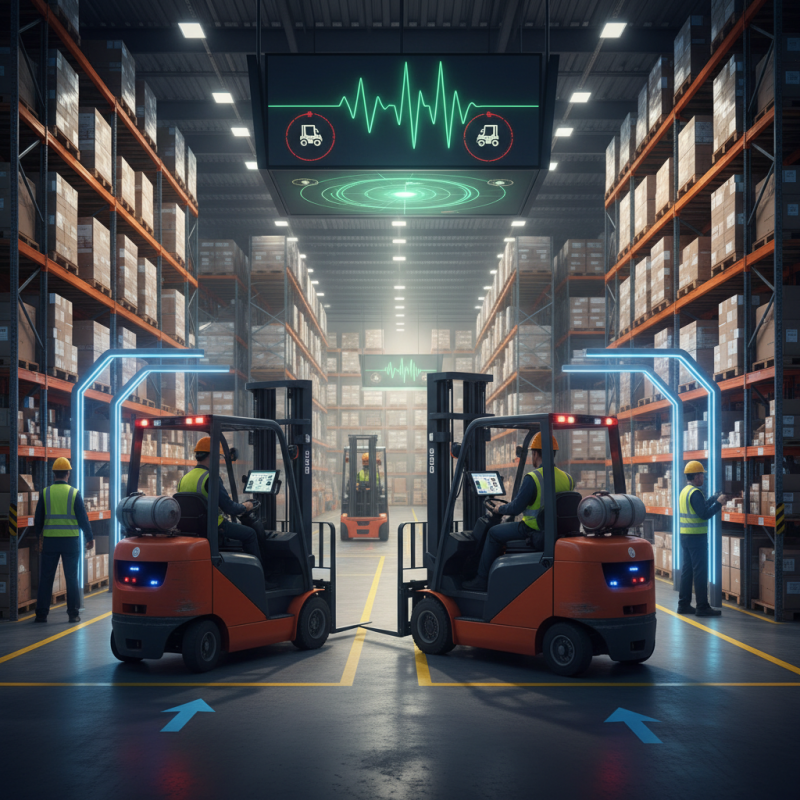
In recent years, advancements in technology have significantly improved forklift collision detection systems. These systems are designed to enhance safety in warehouses and industrial sites. Using sensors and cameras, they monitor the surroundings in real time. When a possible collision is detected, alerts immediately prompt operators to take action. This instant feedback is crucial for preventing accidents.
Many systems now employ artificial intelligence to learn from past incidents. They can adapt to different environments and provide better accuracy over time. Still, some challenges remain. For instance, the system may misinterpret situations, leading to false alarms. Workers might feel distracted if they rely too heavily on these systems.
Integration with existing equipment can also pose difficulties. Not all facilities are equipped for the latest technology. Yet, the evolution of forklift collision detection systems is promising. Continued investment in training and infrastructure will be necessary. The goal is to create a safer work environment while recognizing the limitations of current systems.
Forklift Collision Detection System Technologies
This bar chart illustrates the market adoption rates of various forklift collision detection technologies. Laser detection systems lead with 25% adoption, followed by camera-based systems at 30%. Ultrasonic and infrared sensors have moderate adoption, while LiDAR systems are emerging with 10% market presence.
Key Features of Effective Collision Detection Technologies
Collision detection systems are vital in environments where forklifts operate. An effective system should provide real-time alerts. These alerts help operators react quickly to prevent accidents. Visual and audio signals can enhance awareness. Additionally, systems with automatic braking features promote safety further.
One key feature is sensor technology. High-quality sensors can detect obstacles at various distances. However, the accuracy of detection can vary. Environmental factors, like lighting and weather, often affect performance. Regular maintenance of sensors is crucial, yet often neglected. This can lead to false alerts or missed detections.
User-friendly interfaces are important too. Operators need clear information at a glance. Complicated displays can confuse even the best-trained staff. It's essential to consider human factors in design. Frequent training sessions can help mitigate misunderstandings. While technology is advanced, human error remains a significant risk. A focus on continuous improvement in both tech and training is necessary.
Impact of Collision Detection Systems on Workplace Safety Metrics
Forklift collision detection systems have transformed safety protocols in warehouses and industrial settings. These systems significantly impact workplace safety metrics. They reduce the risks of accidents by alerting operators to potential collisions. When a forklift approaches a pedestrian or another vehicle, the system activates a warning. This proactive measure prevents many accidents before they occur.
Implementing these systems is not without challenges. Workers may become overly reliant on technology and neglect their situational awareness. Training employees to balance technology use with manual vigilance is crucial. Even with advanced systems, human error remains a factor. Regular maintenance of these detection systems is necessary to ensure optimal performance. When a system fails, the consequences can be severe.
Companies have reported noticeable declines in incident rates after adopting collision detection systems. However, it’s essential to track these metrics consistently. Some organizations still struggle to measure the true impact of these systems. Establishing clear benchmarks can help improve overall safety. This ongoing evaluation process can reveal areas for further enhancement and adaptation.
Future Trends in Forklift Safety: AI and Sensor Integration
The integration of AI and advanced sensor technologies is reshaping forklift safety. A recent industry report highlights that workplace accidents involving forklifts account for over 20,000 injuries each year in the U.S. alone. This alarming statistic drives the demand for better collision detection systems. By utilizing AI, companies can analyze real-time data from sensors. This technology not only improves detection but also enhances response times.
Moreover, AI can learn from historical data to predict potential hazards. For example, integrating proximity sensors can enable forklifts to identify nearby obstacles effectively. This can significantly reduce the risk of collisions, which cause about 70% of forklift-related injuries. Yet, many organizations still hesitate to adopt these solutions due to costs or lack of understanding. The challenge remains to balance safety with operational efficiency.
While sensor technologies offer great potential, they are not flawless. False positives can occur, leading to unnecessary stops. Employees may feel frustrated with alerts that interrupt their workflow. It’s essential to refine these systems continually. Feedback from workers on the ground can be invaluable. Their insights can help enhance these technologies, making forks and operators safer in everyday operations.
Best Forklift Collision Detection Systems Explained - Future Trends in Forklift Safety: AI and Sensor Integration
| System Type | Technology Used | Key Features | Integration Capabilities | Future Trends |
| Laser-Based Systems | Laser Sensors | Real-time obstacle detection, precise distance measurement | Compatible with fleet management software | Increased automation and real-time analytics |
| Camera Systems | HD Cameras and Video Analytics | 360-degree view, advanced image recognition | Integrates with monitoring and training tools | AI-driven analysis and machine learning applications |
| Ultrasonic Systems | Ultrasonic Sensors | Sound wave detection for nearby obstacles | Works with existing warehouse systems | Integration with predictive maintenance programs |
| Infrared Systems | Infrared Sensors | Heat signature detection, effective in low light | Can connect with alarm systems | Emerging use in autonomous vehicles |